
Hiking to Everest Base Camp (EBC) was a “must do” item for our trip. We started looking at guide services online and quickly became discouraged. Prices averaged about $3,000 per person. However, after further research online we decided we could tackle it by ourselves for a lot less money. We are experienced hikers with experience at elevation, what could go wrong!?
The first item was to figure out when we were going to start the hike. You want to avoid the monsoon season because it’s too wet and winter because it’s too cold. We opted for November the last month before winter. From what we read, it provides for clear skies and less crowds. The skies were clear, but if this was “less crowded” then I’d hate to see peak season (more on that later).
Kathmandu –
The most popular hike to EBC starts in Kathmandu. When we arrived it just so happened to be Diwali which made for a beautiful display of festival lights across the city as the plane made its final approach.
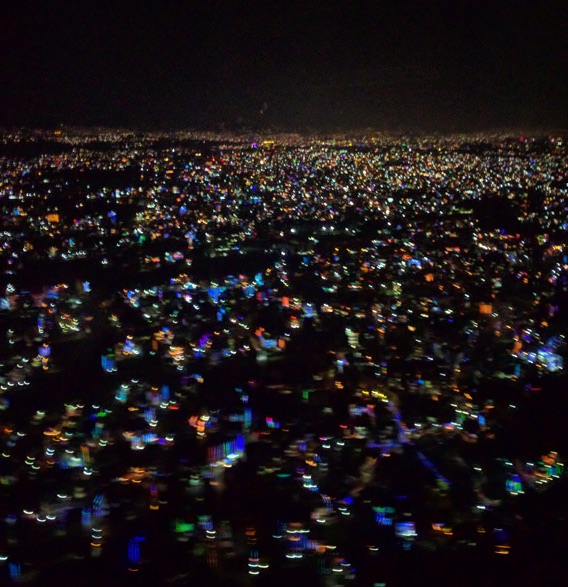
The city was alive with celebration. There was music, fireworks and lights everywhere. We had a fun time walking around the streets, but we didn’t stay up late; the next day was all work. We didn’t want to hull our hiking gear around the world so we allocated ourselves 1 day to rent gear and get our required permits. We woke to find out everything closed due to Diwali. Even the tourist office which is the only place to buy the permits and whose website stated they were open 365 days a year was closed. This was an issue because we had an expensive flight booked the next day!
We posted up in front of the tourist office in hopes that they would open later in the day. But, after 2 hours and a couple failed attempts at speaking with the security guard we headed back to the hotel. It was the afternoon now and luckily some shops were opening. We found a couple sleeping bags, trekking poles, and a proper backpack. Along the way we asked if the permits could be purchased while on the hike. 2 people said yes and 1 no. The odds were in our favor, so we opted to roll the dice.


Next up, get cash. Internet and electricity are luxury items up in the valley so it’s cash only. We were planning to be up there for 14 days and decided to bring $1,000 with us (you can see the final expense below). Nepalese ATMs do not allow you to take out that much money in a single transaction, but luckily we could make multiple small ones. Unfortunately, our bank decided to put up their fraud protection on the first withdrawal and declined the card. After heading back to the hotel and speaking with the bank, we were able to get them to suspend all fraud checks while we withdrew the rest of the cash. The exchange rate is a 100 to 1 so by the end we had a serious stack of bills.
We weren’t planning on hiring a porter, but ended up doing so. It turned out to be a great decision. Our hotel arranged it. For $15 dollars a day we got what’s called a guide-porter. He’ll carry a bag, but not as much weight as a porter. And, he’ll speak English, but not as good as a guide. Not only are we supporting the community, but by not carrying so much weight we can enjoy the hike more and, as we learned, hikers with guides get preferential treatment over hikers without guides. This was crucial when the tea houses (aka hostels) filled up!
Lukla –
The typical starting off point for a trek to EBC is a flight from Kathmandu to Lukla. Though, a masochist trekker could take a bus to Jira and hike 6-7 days to join the main trail. We opted for the flight; however, this isn’t your typical flight.
Lukla airport has been described as the most extreme airport in the world. As if the 2,000-foot drop on one side of the airstrip and the a solid stone wall on the other weren’t enough, the strip is incredibly short. To assist planes taking off and landing in such a short distance, the strip is built on an incline. It’s sure to get your adrenaline pumping!

The chaos of the airport doesn’t help with the tension. We were one of the first people waiting for the flight, but the people in line were aggressive and we were pushed back. That’s when a very friendly group from the UK informed us that flights are notoriously over booked so until you get your boarding pass in hand you are not guaranteed a seat. After putting aside our American passiveness, we were once again in the front of the line.


The flight was loud and adventuresome.


After landing you are inundated with porters and guides looking for business. We could have saved about 50% finding a guide in Lukla vs. Kathmandu, but there’s a risk of not finding one. Though, given the number of people wanting our business, there’s a small likelihood of that not happening.
Overview –
The first thing you notice about hiking to EBC is that the trail is very well maintained. Keep in mind that this is the main express way for the many villages, so it’s been made to accommodate herds of donkeys, yaks, porters and hikers. There’s no way to get lost.


The second thing you notice is the abundance of tea houses. You will come across a grouping at most every hour. This is nice as you can stop for food and water at your leisure. The tea houses along the trek means you will have a bed to sleep in and a hot meal to eat at the end of each day. You can count on having some sort of blanket and a main dining room heated by dried yak dung. The higher you go, the more simple accommodations get and the more expensive costs are.


The price of the room is typically $2, but if you are shopping around it’s not the room price to watch for. When you stay in a tea house you are obligated to also eat all your meals there. If you don’t, you’ll be charged an extra fee. So, compare food menus not room prices. They get rougher as you ascend. Perhaps they hope the elevation sickness will mask the poor conditions.


The food sucks. Although the menus at times look like they provide a lot of variety, they don’t. You get either salty veggies, salty meat or salty eggs with noodles, rice or broth. They do have a version of pizza which was a nice treat. But, the lack of variety of food was the most difficult part of the trip.
You’ll learn to love tea. Staying hydrated is extremely important and a good way to force yourself to drink and stay warm at night is to order tea.


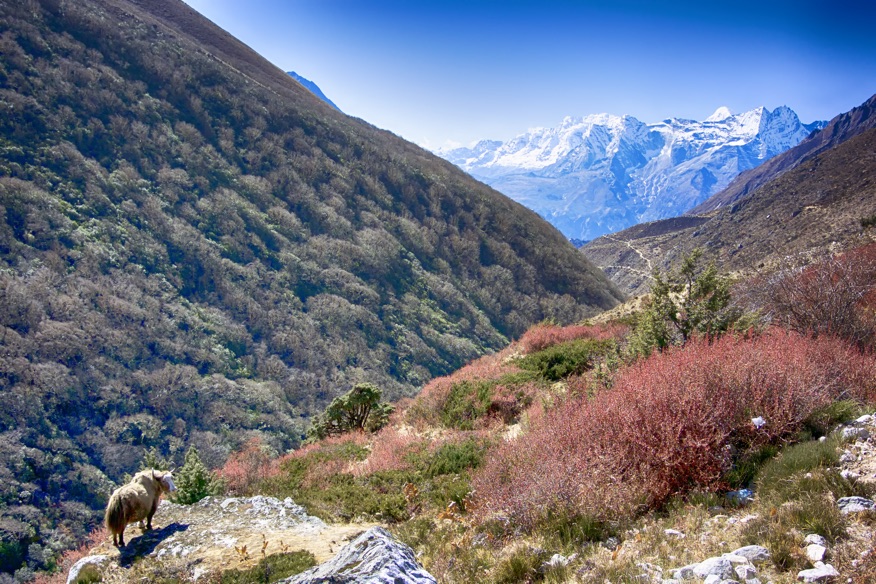
Yaks (and dzos- yak/cow hybrid) are a common sight on the trail. If you come across a Yak Train, you best get out of the way; preferably uphill so they don’t push you over the edge. We passed some porters who carried more gear than the yak! And don’t try to pet the yaks…


If you are looking for solitude, the EBC hike is not for you. You will never be alone and even in the so called low season we encountered many tour groups. We called them “REI trekkers.” Some of these groups were 30+ people in size and would take over the trail. You would have to wait for them to pass.


Over 40,000 people embark on the EBC route. This is great for the local economy but we are uncertain about the environmental effects of so many visitors on the fragile landscape. Even in the low season it’s not uncommon for tea houses to fill up. This is were having a guide is important. The guides and their guests get priority for rooms. We heard of some independent hikers having to sleep in tents because there was no vacancy.
Do not drink the water. The lower you are the worse it is as all villages above them dump their sewage right into the rivers. Bottle water gets expensive (and the environmental impact), so we would filter our water with hollow fiber membrane filter and then use a UV light on it.
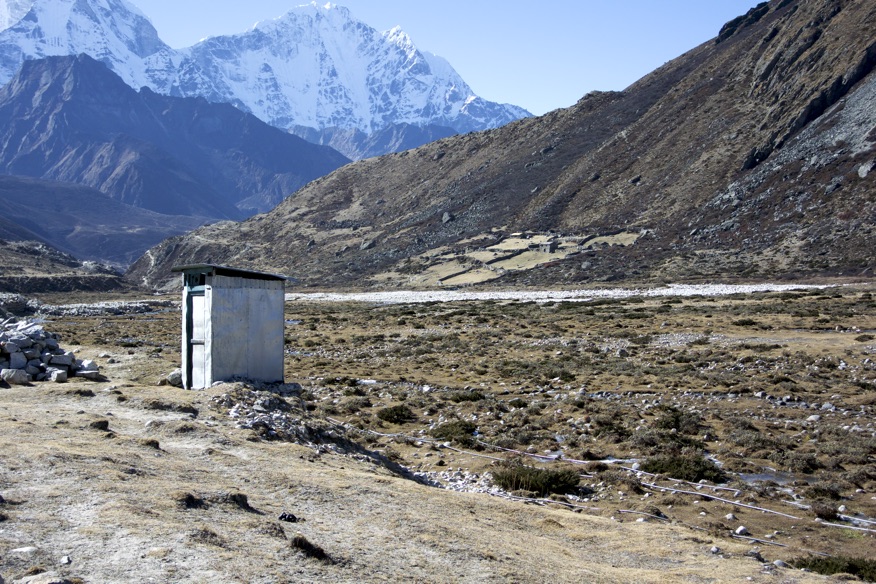
Acute mountain sickness (AMS) is a thing. The biggest mistake we made was being overconfident in our ability to deal with the elevation. We initially planned to take a different route back down to Lukla which would have added 3 more days to our hike, but we decided not to because of how horrid we felt. Chris got sick early at 11,000 feet. He was up all night with a bad headache and nausea. Isabelle got really sick at 17,000 feet and we contemplated turning back before EBC. We weren’t alone either. Most dinner conversations with other hikers revolved around how poor people felt. Even worse, every morning the helicopters were flying overhead taking people back down who were not able to go any further. We saw one person being carried by 2 other hikers to the helicopter. All of this can be avoided if you take Diamox (we did not), hiked slower and rested more. Lesson learned.
Our final itinerary –
Day 1: Lukla (9,448 ft) to Monjo (9,199ft)
Here we ran into a group of guys (and a gal) on a climbing mission of Mt. Cholatse and Ama Dablam. Crazy thing is, some of them were from Isabelle’s college, Western Colorado, and they even had a mutual acquaintance! We would end up running into them each evening until day 6.


Day 2: Monjo (9,199 ft) to Namche Bazaar (11,302 ft)
Along the whole hike, this valley is the wealthiest area in all Nepal. Namche is the epicenter of the Khumbu valley. If you forgot anything, you could find it in Namche. Isabelle got a $5 “North-fake” hat since she has manage to lose 2 hats already.


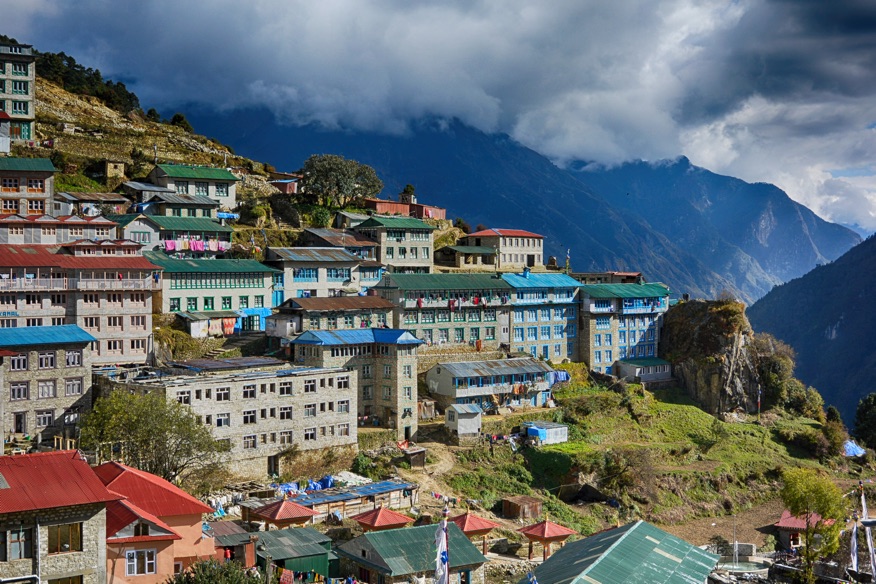
Day 3: Acclimatization day in Namche Bazaar
The elevation took it’s toll on Chris. He was up all night with a headache, nausea and cold sweats. A $3 shower in the morning helped kick it. After tea, we hiked up to the Shepa Museum in town and read about the early days of climbing and Sir Edmund Hillary’s impact in the area. It’s an OK museum, but for $5 it’s a good way to kill the time.

Day 4: Namche Bazaar (11,302 ft) to Tengboche (12,687 ft)
We left the comforts of Namche Bazaar and started to snake our way up the valley. It was cool to see the trail wrap around and disappear into the mountain side. Ama Dablam watched us the whole way. The climb up to Tengboche was a killer. Up and up and up. It seems to never end. At the top, you are greeted by the largest monastery in the Khumbu region. At 5pm, the monks start their evening prayer session which the public can view. When you enter to the right, there are giant 15 feet long horns. Go to the left if possible. If you must sit on the right side DO NOT sit in front of the horns! The session goes on for hours but you can leave at anytime. You cannot wear shoes in there so make sure to wear your thickest socks. It’s cold.


Day 5: Tengboche (12,687) to Dingboche (14,475 ft)
Today’s portion started going downhill, a rarity. We got to the bottom up the valley but of course, then we had to go up.
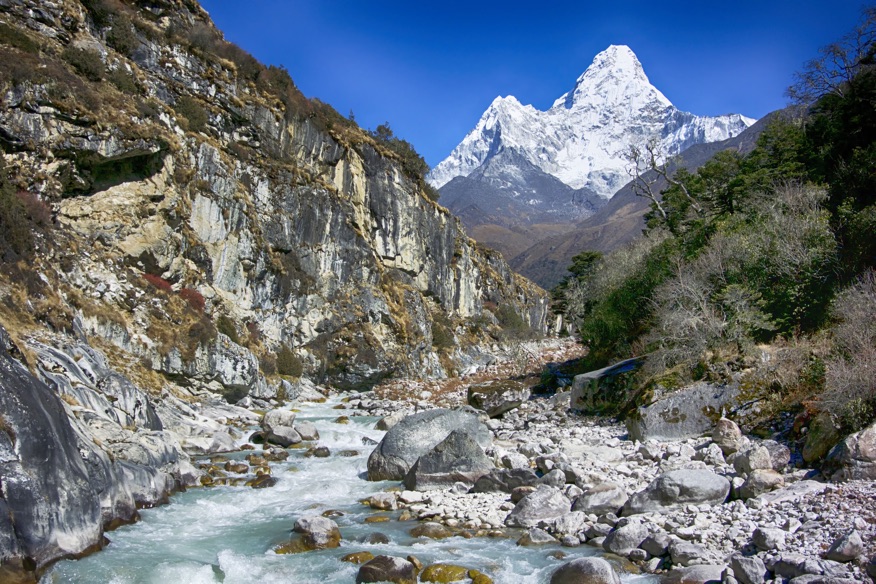
Day 6: Acclimation day in Dingboche
Breathing becomes difficult. For acclimatization purposes, the porters encourage you to spend the day hiking up a giant hill. Isabelle hated that hill. Every five steps she needed a break. Chris and Robin Rai (our guide porter) rallied their way up to beat the crowds behind us. After taking in gorgeous views from the top, the real hard part started; the descent. The rocks are very loose and a rolled ankle seems very likely. At dinner, a conspiracy theory amongst other hikers was formed that the hill is used to support the helicopter rescue business.
The evening was spent drinking warm tea and sharing how miserable we feel with fellow hikers. The people you meet on the first night are the same people you’ll see throughout your hike. It is a spirit lifting moment to say hi at the end of the day or while leap-frogging each other during the day.


Day 7: Dingboche (14,475 ft) to Lobuche (16,109 ft)
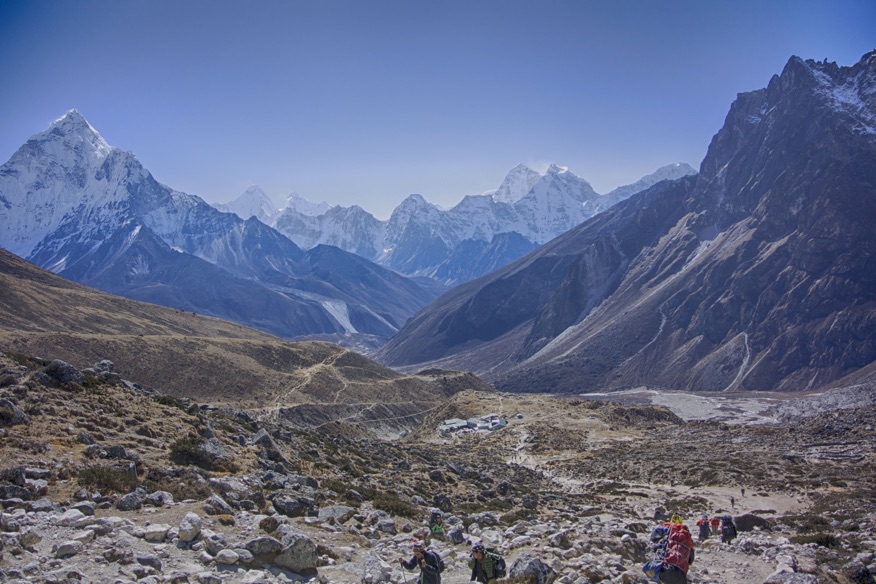
A short in distance day but pushing the daily recommended altitude gain limit. Here, is where we should have listened to our bodies and stayed in Dughla for the night. But we marched right over the daunting, switch backed Thukla Pass to continue towards Lobuche.*face palm*
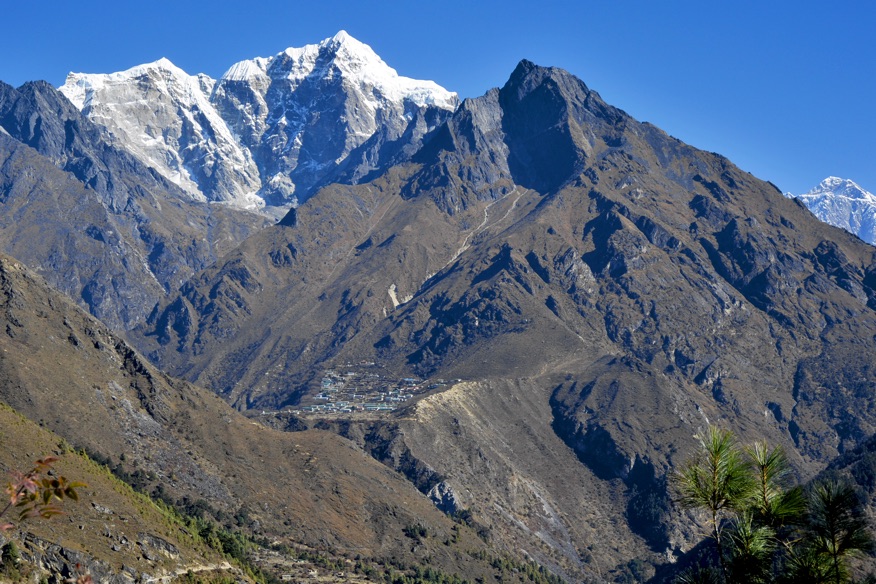


Day 8: Lobuche (16,109 ft) to Gorek Shep (16,863 ft) to Kala Pathar (18,519 ft)
This was a big day. Our bodies hated us. Frankly, we hated them too. Kala Pathar isn’t anything special but a big ominous black mound of rocks but it gives you a proper view of Mount Everest. At the base camp, you can’t see Everest. Luckily, you do this without your pack because you can leave it in your room in Gorek Shep. Isabelle didn’t make it far up Kala Pathar before needing to vomit, so she went back to Gorek Shep and drank tea. Chris and Robin Rai made it and were back before dinner. The lodge was packed with trekking groups, so we had more quality time with our new friends from London and Australia talking about who felt the worst.


Day 9: Gorek Shep (16,863 ft) to EBC (17,585 ft) and back down to Dughla (12,798 ft)
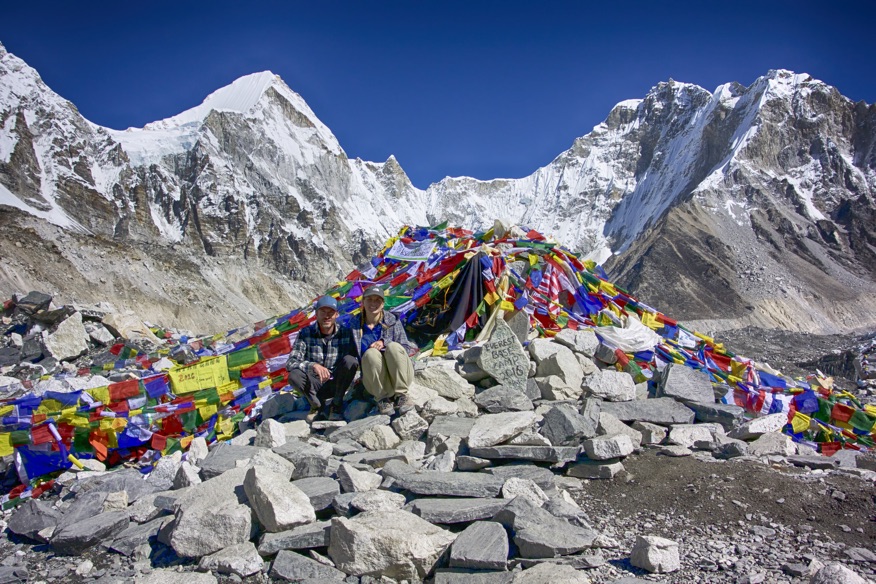
Isabelle could barely eat breakfast. Our UK friends gave us an altitude pill, Diamox, and we set out for the goal of the trek, EBC. We felt very exposed. You can hear rock slides all around and the surrounding terrain doesn’t look very secure. We made sure to not stand in one place for long. The Khumbu Icefall is impressive and you feel immensely tiny next to it. With a few celebratory pictures and high fives, we went back down, picked up our packs and high tailed it for lower elevation. After 8 hours we made it to Dughla.
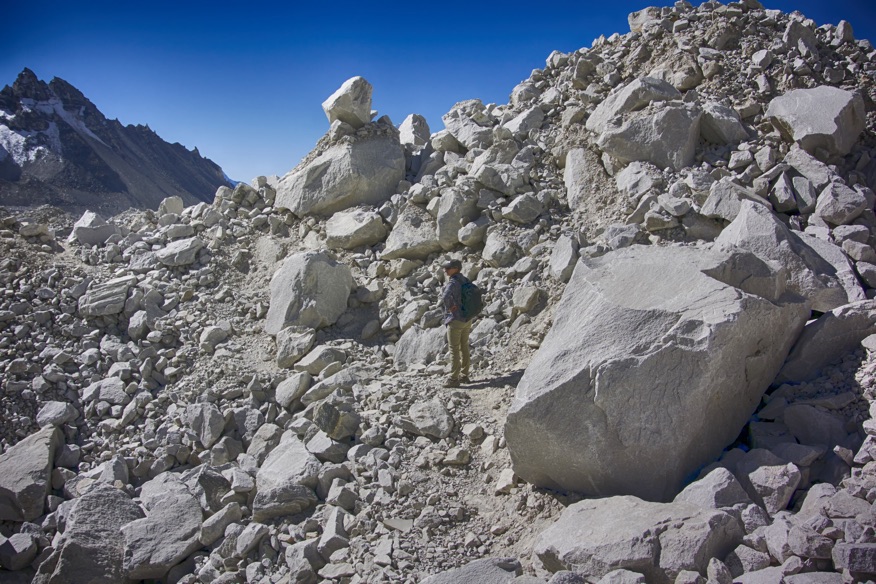
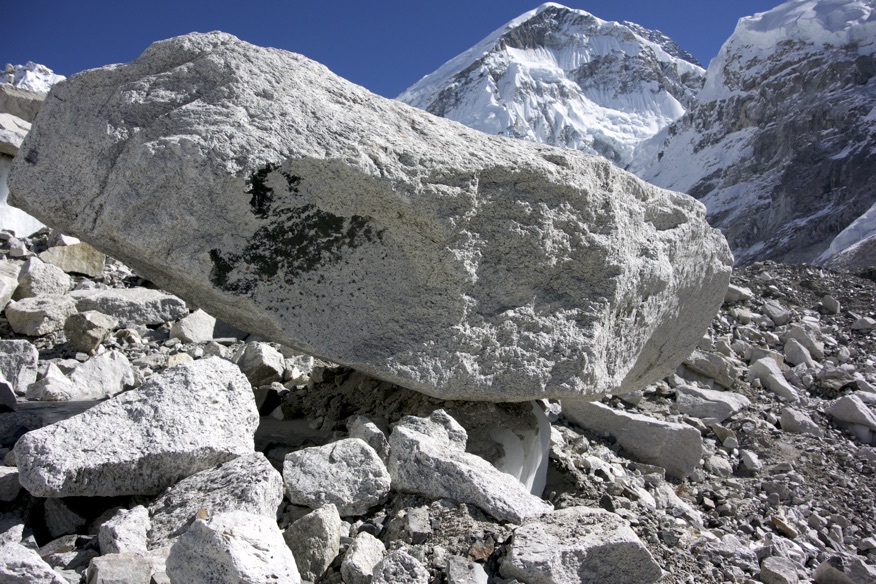
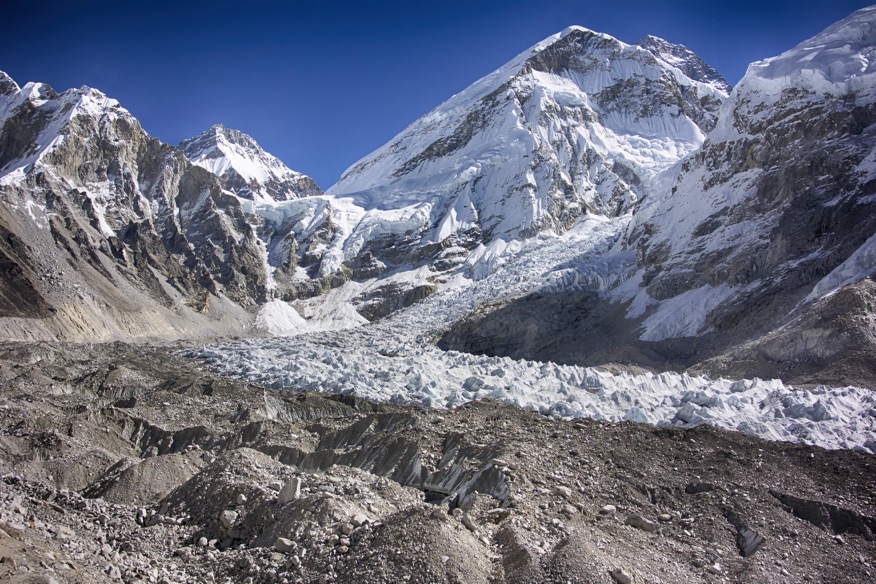
Day 10: Dughla (15,157 ft) to Namche (11,302 ft)
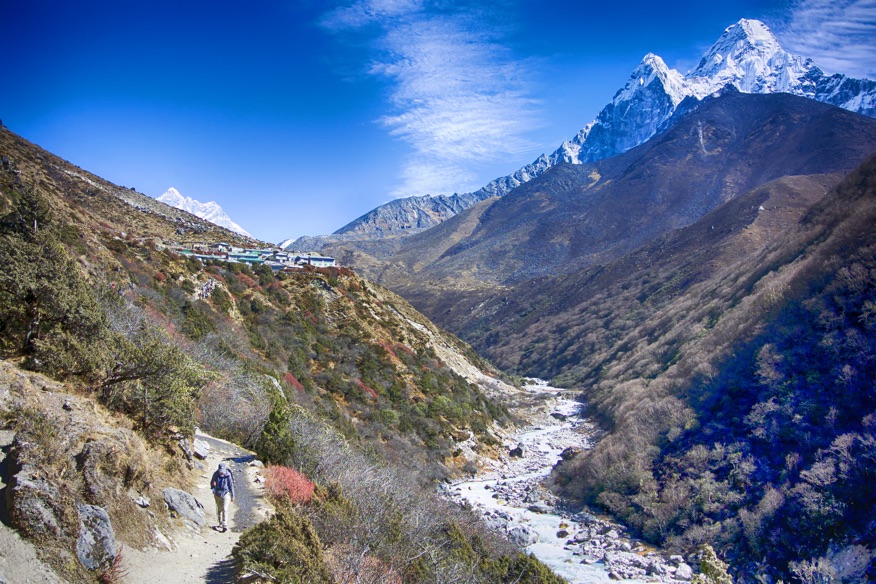
You would think going downhill would be a welcoming event. But after 9 hours of it, you get excited if you feel any bit of flat. The last stretch to Namche Bazaar was the worst, every turn you think the town would be there but it would just be the beautiful endless trail snaking around the mountain. Just before dinner, we made it and celebrated with showers and a beer!
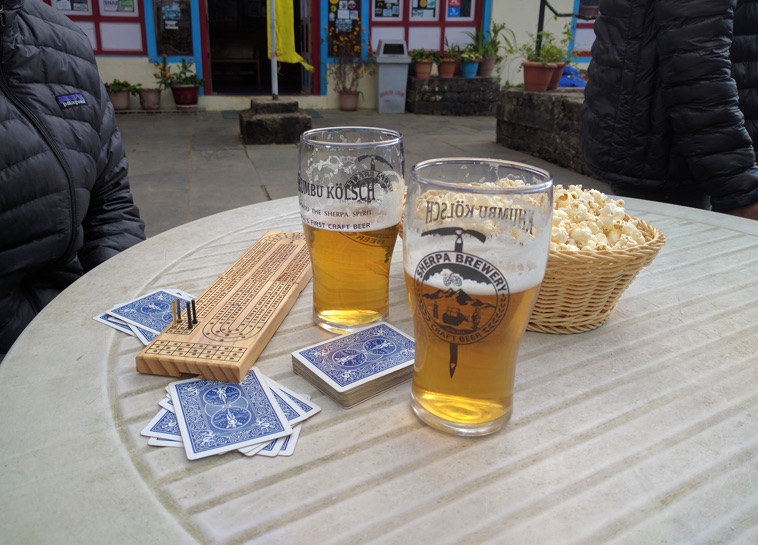
Day 11: Namche to Lulka
Sorry knees but it’s another 9 hour day. But the end meant victory.
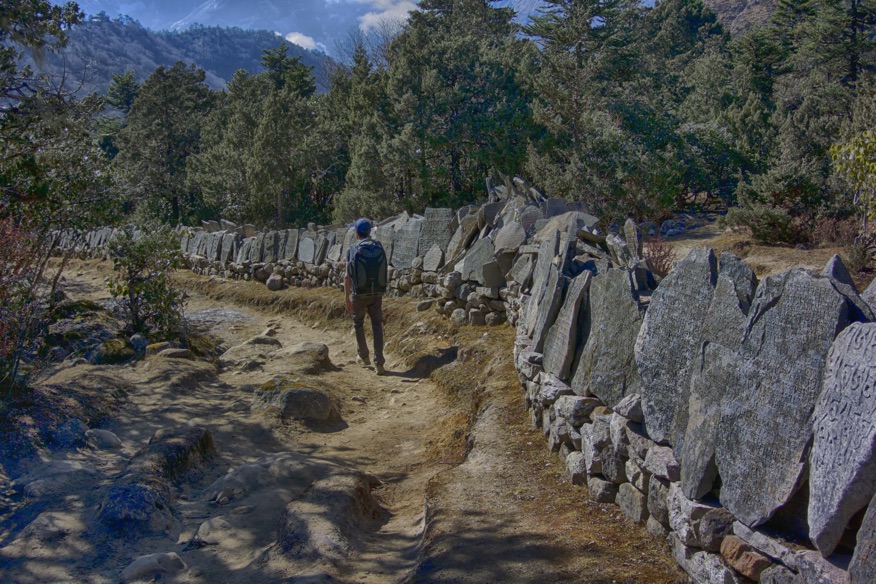

Detailed expenses –
Day 1
| Item | Cost (Rupees) | Cost (USD) |
| Snack | 300 | $2.81 |
| Supplies | 300 | $2.81 |
| Snack | 300 | $2.81 |
| Lunch | 800 | $7.48 |
| Dinner | 1,450 | $13.56 |
| Hotel | 200 | $1.87 |
Day 2
| Item | Cost (Rupees) | Cost (USD) |
| Breakfast | 1,000 | $9.35 |
| Lunch | 1,030 | $9.63 |
| Dinner | 1,350 | $12.63 |
| Hotel | 200 | $1.87 |
Day 3
| Item | Cost (Rupees) | Cost (USD) |
| Supplies | 1,530 | $14.31 |
| Hat | 600 | $5.61 |
| Breakfast | 1,670 | $15.62 |
| Lunch | 1,160 | $10.85 |
| Dinner | 1,600 | $14.96 |
| Hotel | 200 | $1.87 |
| Shower | 350 | $3.27 |
| Sherpa museum tickets | 500 | $4.68 |
Day 4
| Item | Cost (Rupees) | Cost (USD) |
| Breakfast | 1,570 | $14.68 |
| Lunch | 750 | $7.01 |
| Dinner | 1,250 | $11.69 |
| Hotel | 200 | $1.87 |
| Internet | 100 | $0.94 |
Day 5
| Item | Cost (Rupees) | Cost (USD) |
| Breakfast | 1,200 | $11.22 |
| Lunch | 1,200 | $11.22 |
| Dinner | 1,450 | $13.56 |
| Hotel | 200 | $1.87 |
Day 6
| Item | Cost (Rupees) | Cost (USD) |
| Breakfast | 1,000 | $9.35 |
| Lunch | 1,400 | $13.09 |
| Dinner | 1,450 | $13.56 |
| Snacks | 640 | $5.99 |
| Hotel | 200 | $1.87 |
Day 7
| Item | Cost (Rupees) | Cost (USD) |
| Breakfast | 1,500 | $14.03 |
| Lunch | 800 | $7.48 |
| Dinner | 1,500 | $14.03 |
| Hotel | 200 | $1.87 |
| Snacks | 750 | $7.01 |
Day 8
| Item | Cost (Rupees) | Cost (USD) |
| Breakfast | 1,800 | $16.83 |
| Lunch | 1,700 | $15.90 |
| Dinner | 2,100 | $19.64 |
| Hotel | 200 | $1.87 |
Day 9
| Item | Cost (Rupees) | Cost (USD) |
| Breakfast | 2,100 | $19.64 |
| Lunch | 1,500 | $14.03 |
| Dinner | 1,300 | $12.16 |
| Hotel | 200 | $1.87 |
Day 10
| Item | Cost (Rupees) | Cost (USD) |
| Breakfast | 1,600 | $14.96 |
| Lunch | 1,100 | $10.29 |
| Dinner | 2,480 | $23.19 |
| Hotel | 200 | $1.87 |
Day 11
| Item | Cost (Rupees) | Cost (USD) |
| Breakfast | 1,060 | $9.91 |
| Lunch | 900 | $8.42 |
| Dinner | 1,230 | $11.50 |
| Hotel | 1,000 | $9.35 |
| Snack | 600 | $5.61 |
Other
| Item | Cost (Rupees) | Cost (USD) |
| Rental gear | 4,500 | $42.08 |
| Porter tip | 3,000 | $28.06 |
| Porter | 20,060 | $187.60 |
| Airfare to Lukla and back to Kathmandu | 67,151 | $627.99 |
| TIMS | 2,000 | $18.70 |
| Entrance fee | 3,390 | $31.70 |
Grand total
| Cost (Rupees) | Cost (USD) | |
| Total | 80,530 | $1,431.51 |
| Per person | 40,265 | $715.75 |
Lessons learned –
- Only basic fitness is needed, don’t fret with not being in shape. We guessed that the average age on the trail was 55.
- The best way to prepare is to go overnight hiking back at home. Be familiar with your equipment and your process of making camp and packing in the morning.
- Give yourself extra days if you need to rest. If you don’t need them then you can stay longer at Lukla at the end.
- Take Diamox. There’s really no reason not to.
- Sleep with all your batteries. The cold will zap the energy our of your batteries. We took 3 camera batteries and didn’t need to recharge. Our battery bank held a decent charge the entire time too.
- Don’t pack much. And forget about bringing shorts. We brought two sets of clothes and thermals. We never had to hike in the day with thermals on as you get really warm, Isabelle wore them to bed once and ended up too hot.
- You don’t need heavy duty hiking boots. bring a comfortable hiking shoes. Porters will be in sandals and running shoes.
- The water is not safe to drink. Be familiar with your water filtration system.
- Bring baby wipes to “shower” with every night.
- Bring toilet paper. It gets expensive.
- Bring extra hand sanitizer and use it liberally.
- Be vegetarian. You will see the chicken and other meats on the back of yaks headed up the trail without refrigeration.
- Bring all the cash you need. There is one ATM at Namchee Bazaar.
- Check the holiday schedule. Don’t be like us and find that everything is closed in Kathmandu.
- Porters and guides are very nice, but you are the boss. If you don’t, they will take you to where they want to stay. They get free rooms and meals for bringing you to a tea house and they also want want to hang with their friends. Sometimes that’s fine, but other times there are nicer places that you could have stayed at. Check out 3 tea houses and stay on the one you like.
- Most showers are heated by solar which means it’s unlikely you’ll get a hot shower. A few places have showers heated by gas which will be guaranteed to be warm.
- Thoroughly check all rental gear. One of our sleeping bag’s zipper was broken.
- Blankets are provided at tea house, but it’s not enough. A sleeping bag in required. But not a 4 season one.
- The true cost of lodging is the food not the price per night.
- Everest is your limit when it comes to budget. Ours is about as basic as it gets (minus the guide-porter). If you want luxury, it’s available. You can hire horse to ride on some segments. Helicopter pads are everywhere. And, some tea houses are compressed in to help with the elevation.
- Permits can be purchased on the trail, but you need a good excuse as to why you didn’t get one in Kathmandu.
- You will get cold at night and hot during the day
- Toilets are worse the further you head up
- You will make some great friends as you complain to each other every night
- Guides get priority on accommodations. If you don’t have one, be prepared to sleep in a tent or continue hiking to the next village.
- There were a lot of sick people on the trail. Bring vitamin C tablets.
- You need to show your bag ticket when collecting bags on return to Kathmandu
- Kathmandu is really, really dusty. We had to wear a face mask when walking around and we still developed a bad cough.
 Itinerit blog